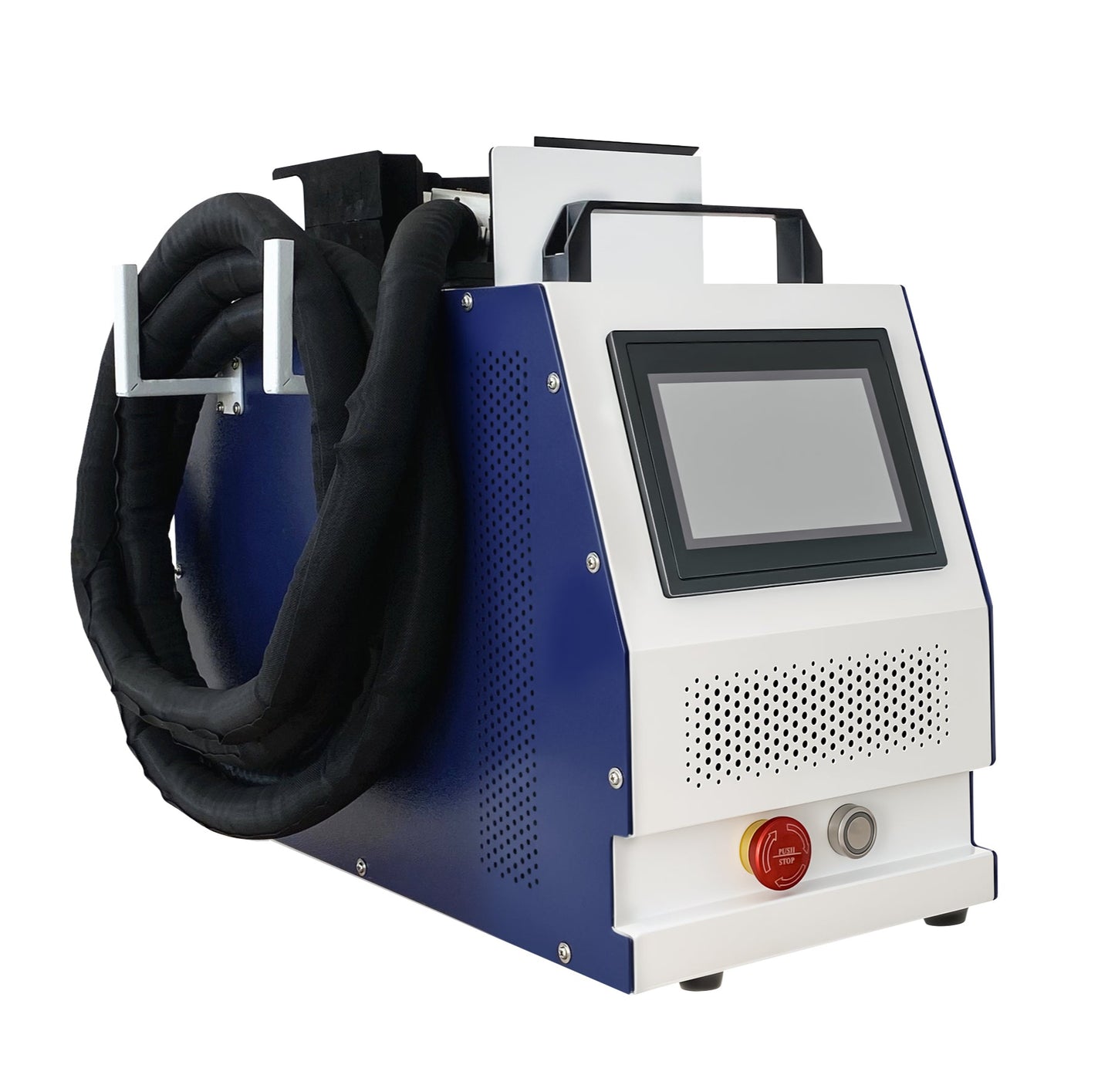
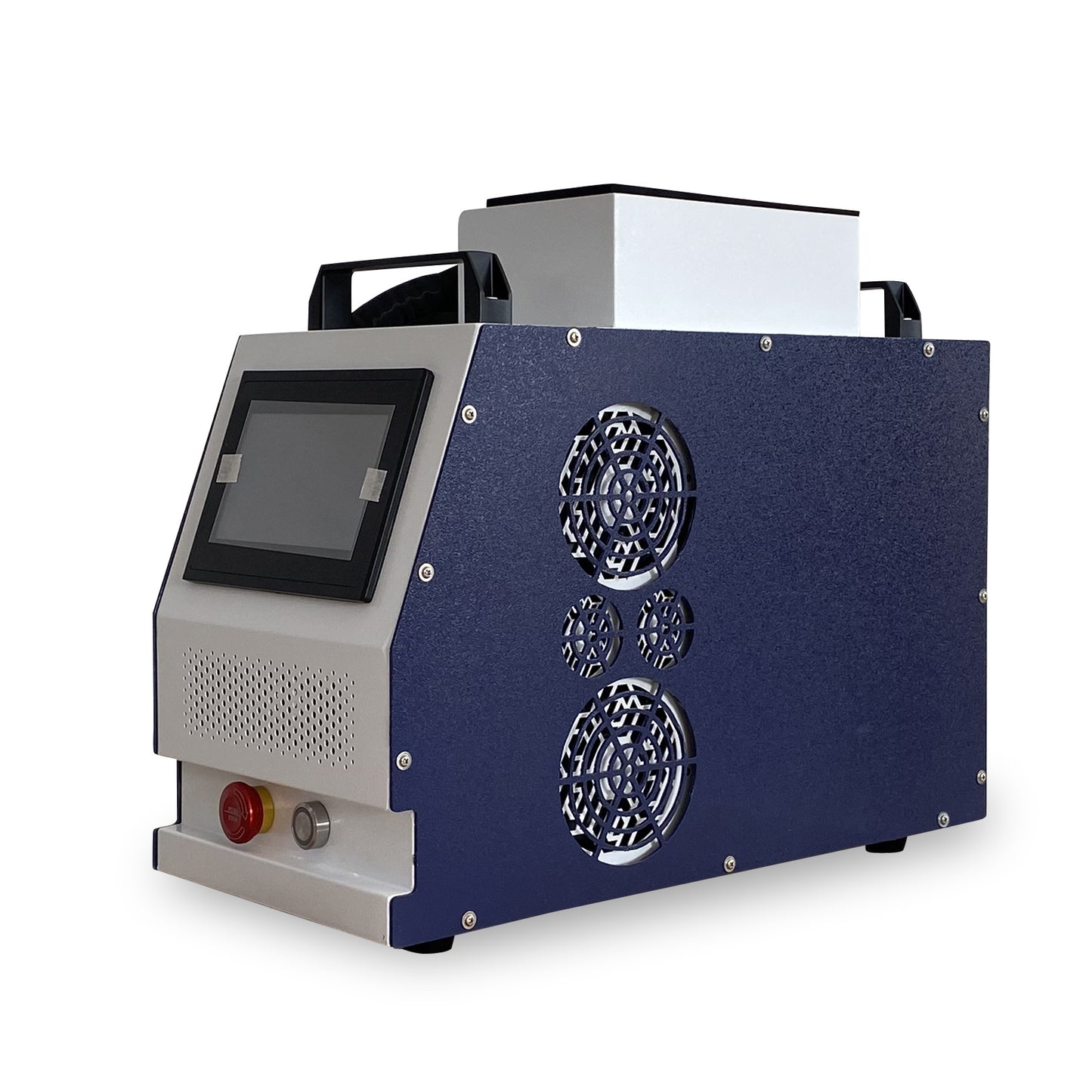
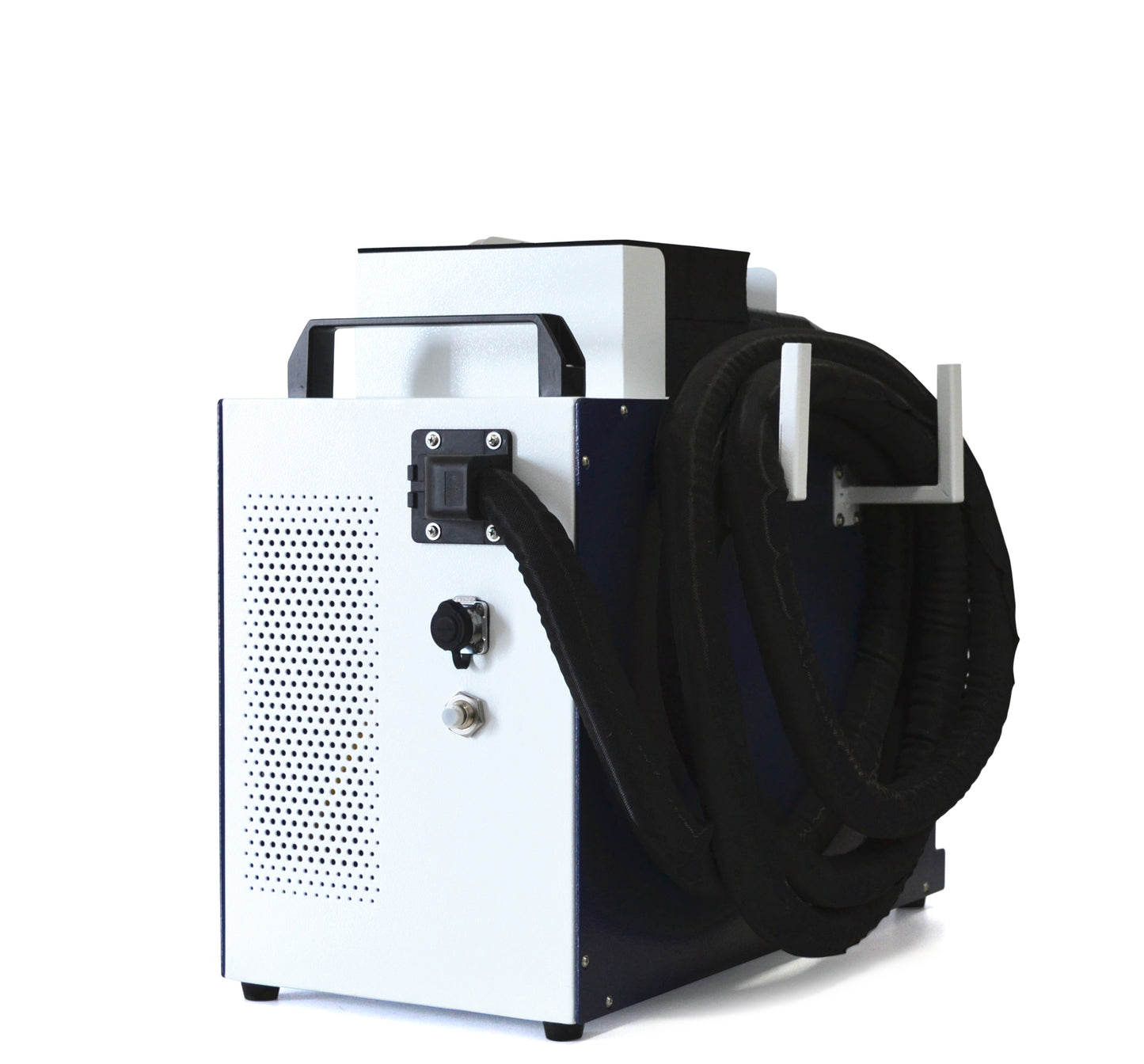
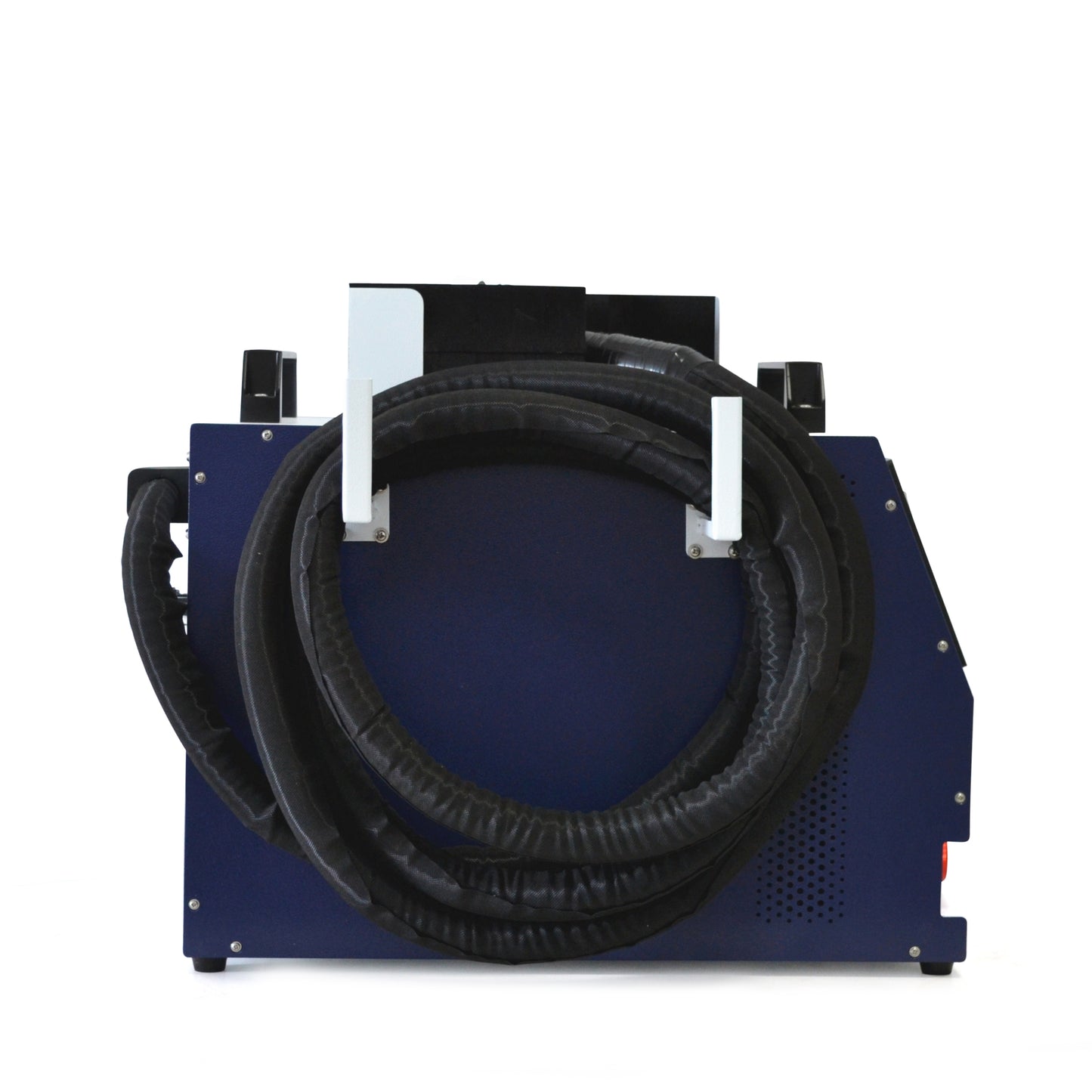
200W Pulse Laser Cleaning Machine Wood Paint Metal Rust Paint Removal - 110V Air Cool
200W Pulse Laser Cleaning Machine Wood Paint Metal Rust Paint Removal - 110V Air Cool
Clearance
Machine: 23.0(L) x18.0(H) x 10.0(W) inches
Weight: 28kg, 62 lb
Parameters
Laser Source: 1060-1080 nm pulse fiber laser
Laser Peak Power: 8 KW+
Laser frequency adjustment range: less than 200 KHZ
Laser pulse width: 150-190 ns
Machine Power Consumption: less than 0.8 KW
Cable Length: From Base Unit to Head: 5 m, around 16.5 feet
Cooling System: Air cooling
Cleaning Head Gun: 1.6 lb handheld Wobble head Gun
Operating Environment:
Storage temperature: 5-131 ℉/ -15-55 ℃
Operating temperature 50-99 ℉ / 10 - 38 ℃
Humidity 5-85% (no condensation)
Maximum input working pressure < 1 MPa.
Safety: Class 4 Laser Device. Customer responsible for standard ANSI Z136.1 safety precautions.
Facilities Electrical Requirements: 100-130V AC,50/60Hz
Pulse Laser Machine Accessories
8 mm and 10 mm OD Air Pipes
Aluminum Stabilizing Frame
Flexible Side Air-Blow Pipe
D48-3 Protective Lenses – 10 pcs
Safety Glasses
Allen Wrench Set
Non-Stick Tape
Machine Dust Cover Bag
Face Masks
-------------------------------------------------------
A pulsed laser cleaning machine is an excellent tool for removing varnish and other finishes from wood, offering a high-precision alternative to traditional sanding. The process works by firing nanosecond bursts of high-energy light that the varnish absorbs, causing the coating to vaporize or crack away. Because wood absorbs much less energy and the pulses are so short, the heat rarely has time to penetrate the surface, which prevents the charring or burning often associated with other thermal methods.
This technology is particularly effective for restoration projects involving lacquer, shellac, paint, or even mold. Its non-contact nature makes it ideal for cleaning intricate carvings or delicate antiques where mechanical sanding might damage the wood grain or detail. Beyond being more precise, it significantly reduces the need for harsh chemicals and eliminates the heavy dust production typical of traditional stripping methods.
However, there are technical limitations to keep in mind for high-performance applications. While it excels at detail work, a pulse laser can be slower than industrial sanding for large, flat surfaces. Additionally, thick polyurethane, epoxy, or UV-cured high-gloss varnishes may require multiple passes or specific power adjustments to remove completely. Success ultimately depends on fine-tuning the settings to ensure the energy level is high enough to strip the finish without reaching the threshold that would begin to affect the underlying wood fibers.
It uses a 1060–1080 nm pulsed fiber laser with adjustable pulse frequency and very high peak power less than 10 kW.
Pulsed laser cleaning is designed to remove surface layers like paint, varnish/lacquer, rust, oil or stains
while minimizing heat damage to the base material, which is why it can be used on wood surfaces.
Because the laser fires very short pulses (150–190 ns), the coating absorbs the energy and vaporizes while the wood underneath receives much less heat.
A 200 W pulse cleaner is actually a common power level for furniture restoration, antique wood cleaning, and metal rust removal
If you use a machine like this on wood, settings are critical:
Typical starting parameters: Power: 40–120 W, Frequency: 60–120 kHz, Fast scanning speed
Wide scan pattern
If power is too high or you stay still, wood can burn. This pulse laser cleaner can remove varnish from wood, especially thin coatings or furniture finishes. It will work well for restoration or detail areas, but it will be slow for large flat surfaces like floors or big panels.
Couldn't load pickup availability
Out of stock